
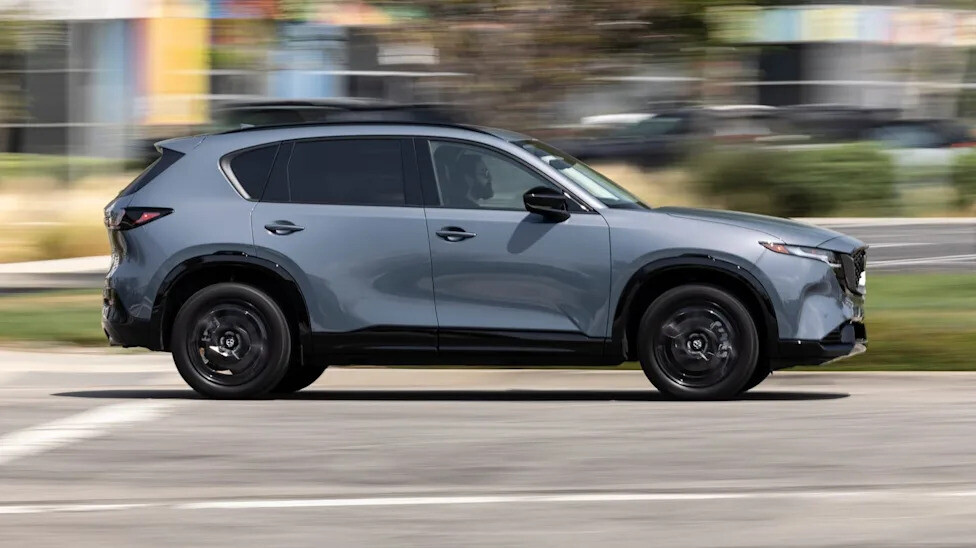
As your life changes, some SUVs are better than others at keeping up. They're flexible enough that when a new partner, dog, or child redefines family for you, your ride may still work well before a new car is necessary.
That brings us to our long-term 2026 Mazda CX-5, a smartly sized compact SUV we've spent months driving. Is the redesigned 2026 CX-5 a good family car? Read on to see its family car scorecard.
IIHS - MotorTrend
Safety: Great
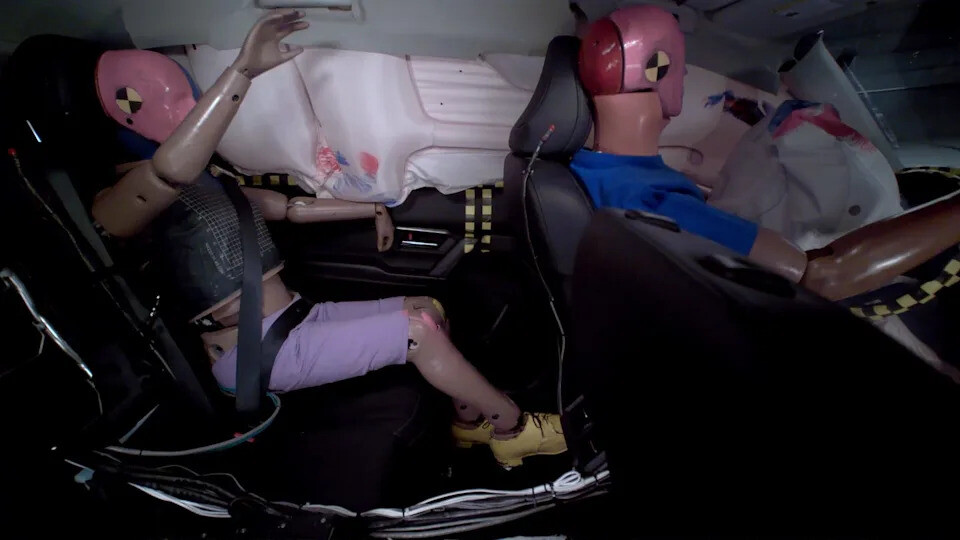
Like all Mazda SUVs, the 2026 CX-5 is a 2026 IIHS Top Safety Pick+. These are not the participation certificates of the automotive world; the awards are not easy to get.
Diving into the CX-5 test results, the Insurance Institute for Highway Safety recorded a top rating of Good for every crash test and automatic emergency braking test. For the latter, IIHS evaluates whether the test car can avoid a collision at various speeds with another car, motorcycle, semi-trailer, child, and adult. In these ratings, the related CX-50 does almost as well, while the Kia Sportage and Subaru Forester match the 2026 CX-5.
Don't be overwhelmed by this (and trust us, there's way more detail than we're sharing). Our advice is to focus on whether a car has been fully tested and if so, whether it earns one of IIHS' two awards. As this is written, compact SUVs with 2026 IIHS awards include the Subaru Forester, Mazda CX-50, Mazda CX-5, outgoing Hyundai Tucson, and Kia Sportage.
Brian Vance - MotorTrend
Visibility: Good*
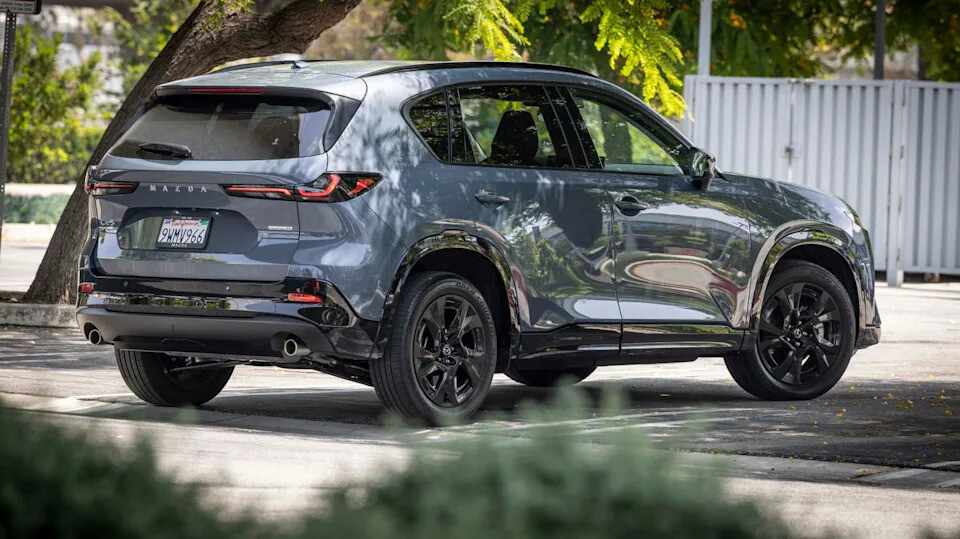
Years ago, I was asked for compact SUV recommendations by someone who wanted good visibility as their top priority. That's an easy one: the Subaru Forester. When you want more style, however, the 2026 Mazda CX-5 does a good job, too.
I add an asterisk here because I drive the Mazda with two rear headrests stashed in the trunk. This is a common problem with modern cars: Rearward visibility is often compromised by rear headrests. We'd like more brands to figure out a way to maintain comfort along with a way to manually fold them down or forward. An example of this at a more expensive price point is how Volvos allow the driver to fold the rear headrests out of the way from the driver's seat.
A digital rearview mirror isn't available on the CX-5. We've found the feature helpful if you've got a back seat filled with people or a couple large dogs. Suddenly, visibility is perfect no matter who is back there.
Darren Martin - MotorTrend
Child Seat Installation/Dog Ingress: Great
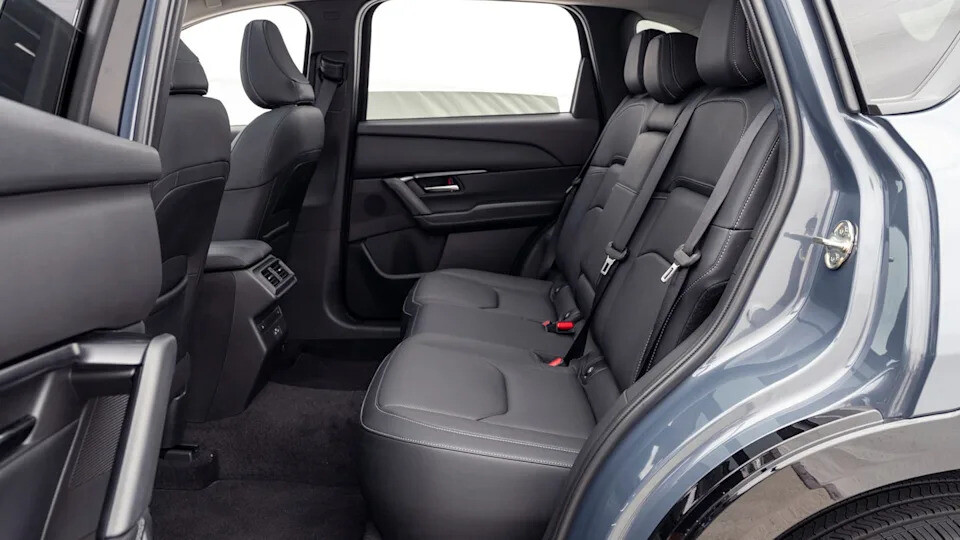
Some MotorTrend editors really like wide-opening rear doors like the ones Mazda has offered for years. A few other brands also have this feature, which makes getting your kid into a child seat that much easier. The same is true when it's time for a pup to jump in the back seat for a trip to the dog park.
In IIHS testing of child seat anchors, the 2026 CX-5 earned the best possible rating of Good+. Wide-opening rear doors are another CX-5 advantage, one we've also appreciated on the CX-90. Rear air vents are standard on all but the lowest 2.5 S trim level.
Brian Vance - MotorTrend
Cargo Area: Good
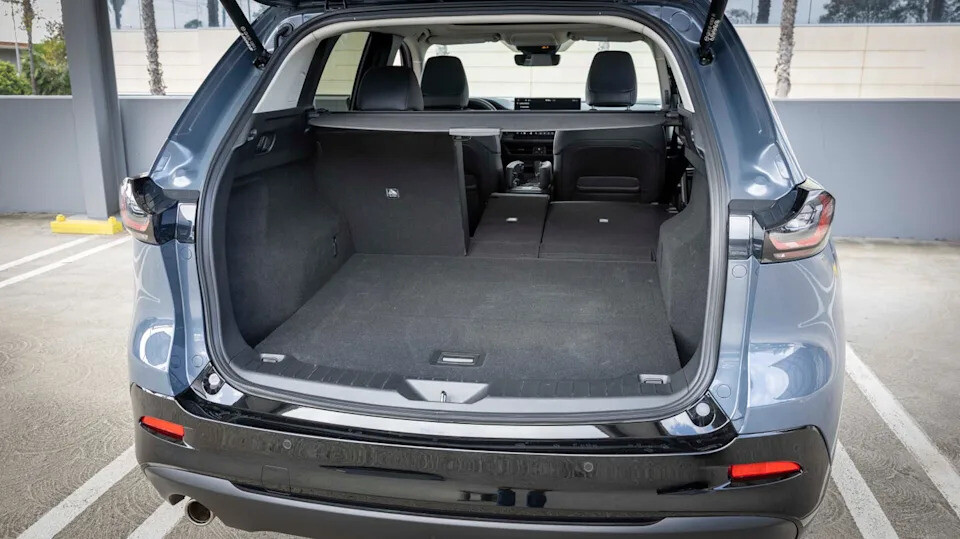
A bigger cabin and cargo area were two of the biggest changes for the 2026 Mazda CX-5. This didn't leapfrog the CX-5 to the front of the class—the Kia Sportage and Hyundai Tucson still have it beat—but the spacious cabin and trunk are more competitive now.
The 2026 CX-5 offers 33.7 cubic feet of cargo space with an open, depressed area on both sides for stuff you don't want bouncing around. That's more space than the Subaru Forester and Mazda CX-50 but less than the Kia Sportage, Toyota RAV4, and Hyundai Tucson. Part of the enduring appeal of compact SUVs is the way they mix a practical and manageable size with relatively low pricing. The 2026 CX-5's bigger proportions make suitcase Tetris easier than before.
Brian Vance - MotorTrend
Ease of Controls: Poor
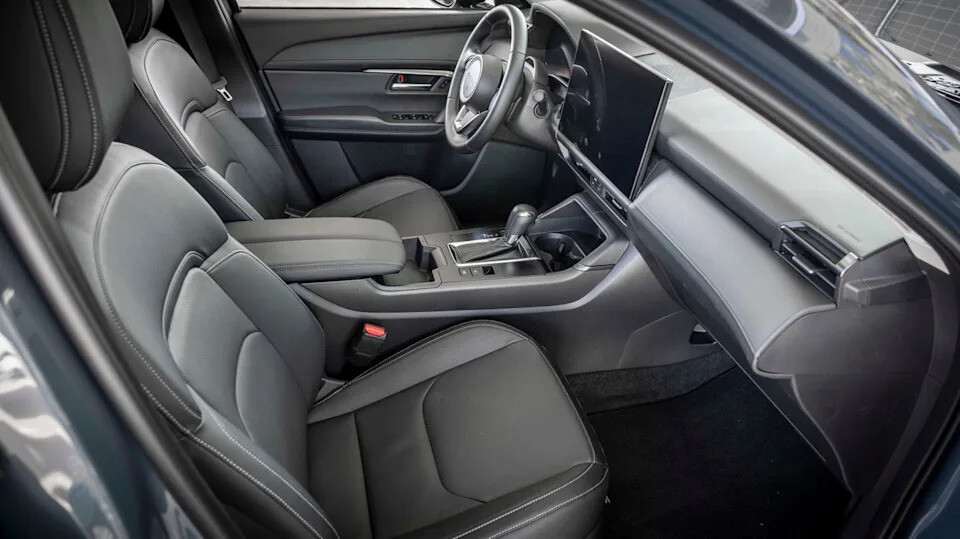
So far, so good for this 2026 Mazda CX-5's family car review, but here's where things shift. No matter what your family looks like, intuitive controls are important. A well-designed interior can help minimize the times drivers can't find what they need at a glance, requiring them to look away from the road for just a second to adjust the fan speed or heated seat.
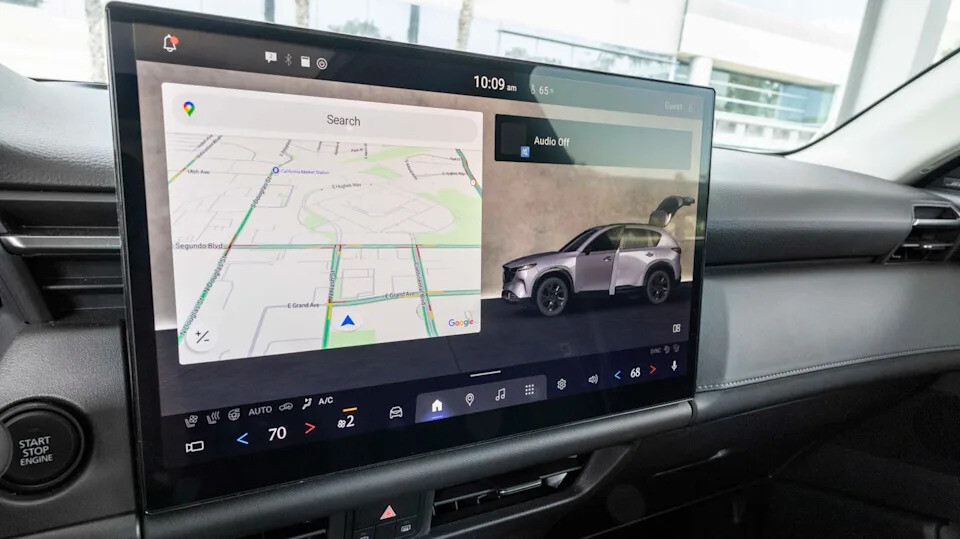
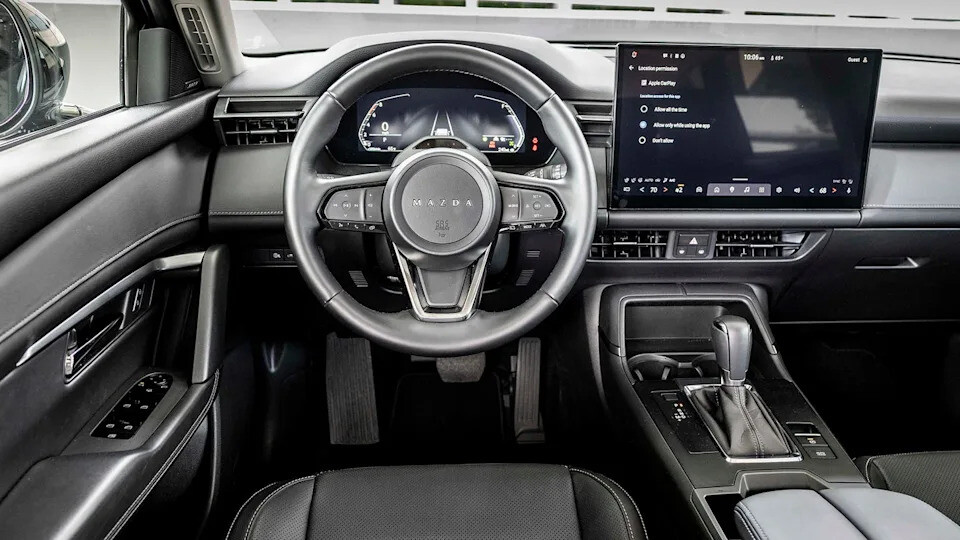
The Mazda's tech includes a 12.9- or 15.6-inch display running a new infotainment system. (Our long-termer has the latter.) Almost everything is on the screen with only a few physical buttons on the interior. Unfortunately, we've found the system slow and less intuitive than it should be. To be clear, we're not focusing on the system reliability issues we experienced for months, though that is a concern, too.
Here are a few examples about daily life with the Mazda. Adjusting the heated and ventilated seat requires touching a tiny sliver of the screen to access a secondary menu. Just try that while you're in motion. Fan speed adjustments also could be easier, and everything should be quicker.
Brian Vance - MotorTrend
Then there's the driver profile system, which is one of the most frustrating features I've tested on a new car in years. Similar to our experience on a CX-70 we drove for a year, it doesn't reliably recognize me enough of the time to be a cool luxury. The idea is that you can preload settings on everything from the head-up display to the sound system. At least on our specific CX-5, it sometimes defaults to the guest mode, and I end up redoing a few settings.
So what's the connection to a family car review? Guess who's waiting in the car while you futz with settings. Again.
We see two solutions here; the first is to avoid the top Premium Plus trim. It's the only one with the driver personalization feature. The second is to work around the interface issues by using the Google voice assistant. The Google-based voice command system was already good, but recently it got upgraded with Google Gemini AI.
Brian Vance - MotorTrend
This means you can ask for headlines of the day or ask complex commands ("lower temperature to 68 and increase fan speed"). If you don't like voice commands interrupting your conversation or whatever you're listening to, however, you must use the screen. After an initial one-year trial period, the subscription cost for the Premium plan of Mazda Connected Services with Google Built-In is $15 a month. You also get some app-based conveniences, but this might be pricey for those who still don't want to talk to their cars. (AI assistants are increasingly common.)
Summed up: Based on our extensive time with the 2026 CX-5 and despite a few improvements to system reliability since we first hopped behind the wheel, its tech is a miss from an ease-of-use standpoint. Mazda fans can brighten the situation by avoiding the Premium Plus trim and paying for the Premium plan from Mazda's Connected Services. Or you could get a CX-50 Hybrid, accept its older infotainment system on a smaller screen, and not subscribe to anything.
Brian Vance - MotorTrend
Is the 2026 Mazda CX-5 a Good Family Car?
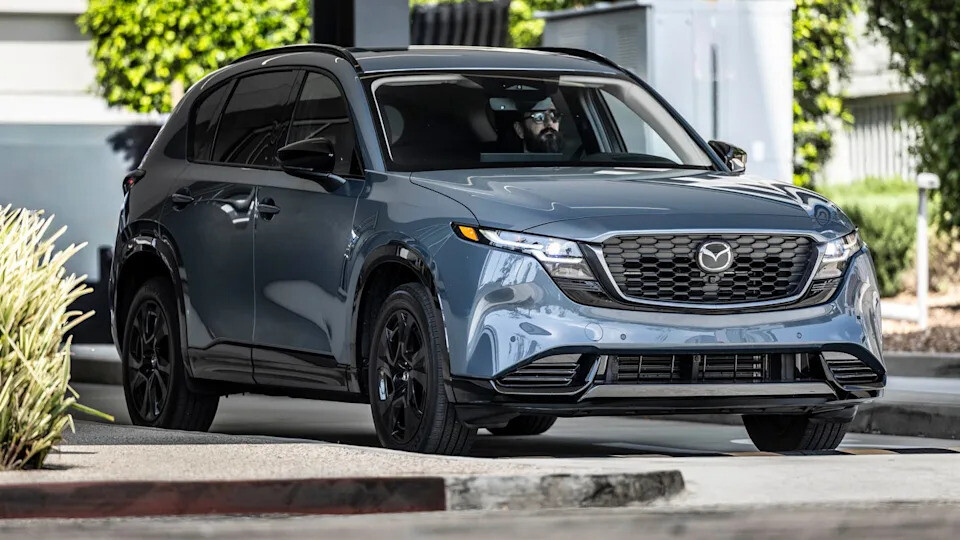
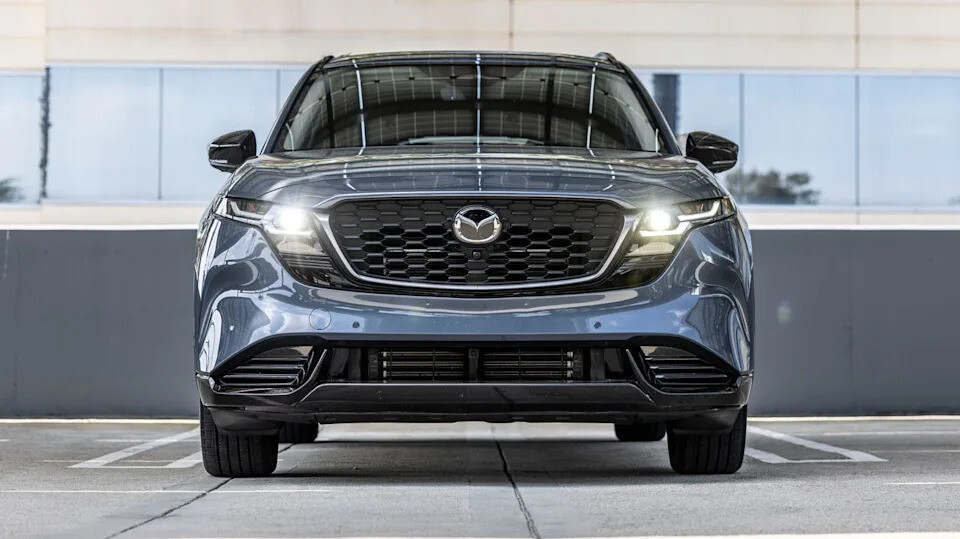
The 2026 Mazda CX-5 is a good family car with one difficult-to-avoid weakness that makes it tough to recommend in a segment with a dozen competitors. We've thoroughly covered how fantastic the Mazda performs in safety tests, and its newly enlarged interior is a plus even though others are bigger still. Visibility is fine, which leaves us with tech.
Even with the latest software update installed as this is written, Mazda still has work to do to improve this, especially with the 2026 CX-5 in Premium Plus trim. If all of that doesn't bother you, however, the Mazda otherwise fights hard to earn the money of families looking for a good compact SUV.
Brian Vance - MotorTrend