
More and more car makers are offering an EV version of a gas-powered favorite. Which should you pick, the more expensive EV, or the gas-only version? We break it down for you.
Gas is expensive and it's driving a lot of us to look at EVs. Seriously: It can cost $15 to drive an EV 300 miles, but put gas in that same car and it'll average about $50. Counting commutes, errands and school runs and it adds up. That's a brand new pair of Nikes — every month. And even though many of us have figured out how to live with EV charging and how to finesse charging on a road trip, EVs vs gas cars is still a buying decision that carries some weight.
To make it easier, many carmakers have moved away from building electric-only models and now offer EV as a powertrain choice—along side gas, hybrid and plug-in hybrid options. Brands like Hyundai, Dodge, Volvo, BMW and Mini are just some of the carmakers that offer a gas-only or hybridized version of their top sellers to serve buyers who want to have their cake and eat it, too.
So, with so many popular models offering both a gas-powered version alongside a fully-electric model, which is worth your signature? We broke down the most prevalent options, the defining features for each powertrain, and help point you in the right direction to decide: gas or electric?
This story is 100% human-researched and written based on actual first-person knowledge, extensive experience and expertise on the subject of cars and trucks.
What to Look For When Shopping for EVs vs Gas Cars

There are good reasons to buy either version, but you should consider these factors first
There are good, rational reasons to buy either. The EV version may be a smarter buy for commuters who can charge at home while the gas-only version may be wiser for those who would otherwise have to rely on public chargers or live in remote areas without a lot of charge stations.
Aside from that, here are a few other things to take into consideration:
-
The Upfront Price Gap vs. Long Term Costs: Does the price difference justify the fuel savings? Does your state force you to pay extra when you register an EV because you didn't buy gas? How much does gas cost versus electricity where you live?
-
Range & Charging Capability vs. Gas Convenience: Can you charge at home overnight? And can you install level 2, 240V outlet for faster charging? If yes, a 230–300 mile range is almost always more convenient than stopping at a gas station. If you park on the street or in an apartment without home charging, gas may still be the winner. Sometimes the gas-only version has a higher range of miles per tank, though sometimes the EV does. But these are numbers you should lay out and evaluate.
-
Horsepower & Driving Feel: EVs almost always deliver significantly more power and instant passing power, but they carry 800–1,200 pounds of extra battery weight, which can change the way a car handles compared to the gas-only version.
-
Cabin & Cargo Practicality: Does the battery eat into footwell depth, rear seat legroom, or trunk floor storage? Most don't, but it all depends on where the battery is placed.
We Love the Electric Hyundai Kona, But the Gas-Only Version is a Real Bargain
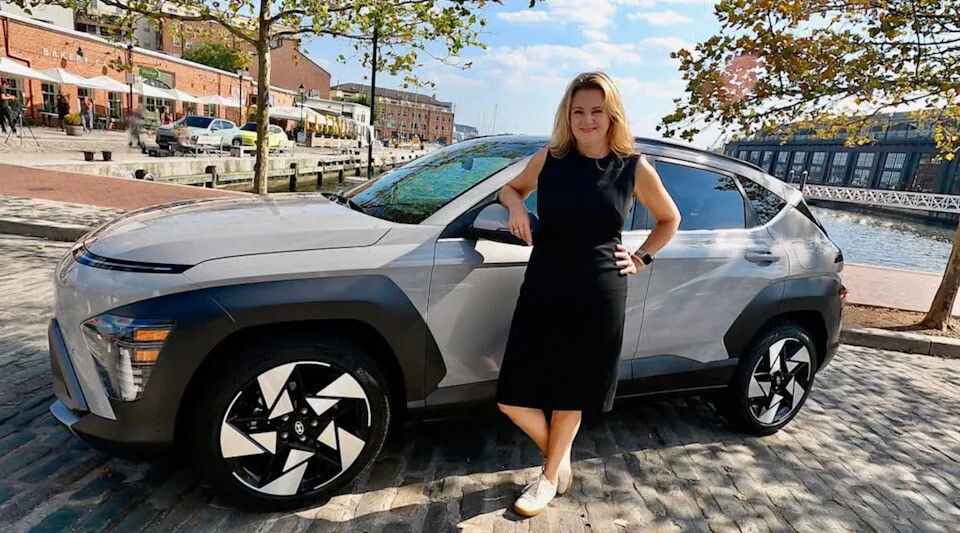
The Hyundai Kona compact SUV
We love both the gas-only version and the EV version of the 2026 Hyundai Kona because both models are incredibly accessible. It's one of the easiest transitions into an EV lifestyle, with the electrified version starting at around $34,000 compared to the gas-only price range of $25,000 to $32,000.
While the Hyundai Kona EV is a very cost-effective way to drive electric, you get a bit more for your money with the gas-only version. First, there are four trims to choose from ranging from bare-bones to borderline luxurious, you can still get up to 35 MPG with front-wheel drive (and 29 with AWD), and a maximum range of 434 miles with FWD.
The EV version only grants you a range of 200 to 261 miles on the single available trim, the SE, and you don't get all-wheel drive. You're stuck with FWD. So, unless you're sticking to commuting within city limits and charging at home (since it takes about 45 minutes to charge from 10 to 18%), the gas-only version is a no-brainer. However, since the Kona EV is skipping the 2026 model year, you may be able to get a really good deal on a used 2025.
The Genesis Electrified GV70 is Fantastic, But the Gas-Only Model is Priced Just Right

The price is perfect for the gas-only version of the Genesis GV70
Genesis' EVs are wonderful, and we adored the Electrified GV70—but we couldn't help but notice how much more you're paying for a bit more horsepower and a much, much lower overall range. For reference, the gas GV70 ranges from $49,350 to $71,700, while the Electrified starts at $58,500 to $70,650.
With the gas-only version, you have two engines to choose from: either a 2.5-liter turbocharged four-cylinder engine, that puts out less horsepower but earns a higher range of 487 miles thanks to better mileage, or a beefier 3.5-liter twin-turbo V6, that lends you substantially more power at the cost of mileage, but you still see a respectable driving range of 435 miles on the highway with two-wheel drive.
No matter how you configure the Electrified GV70, your maximum range is 250 miles. Yes, you get quick charging, more horsepower, and a smoother, more refined driving feel, but the difference in price, overall range, and options make it a bit difficult to recommend over the gas-only models.
The Porsche Macan EV Stands in the Shadow Of the Gas-Only Macan
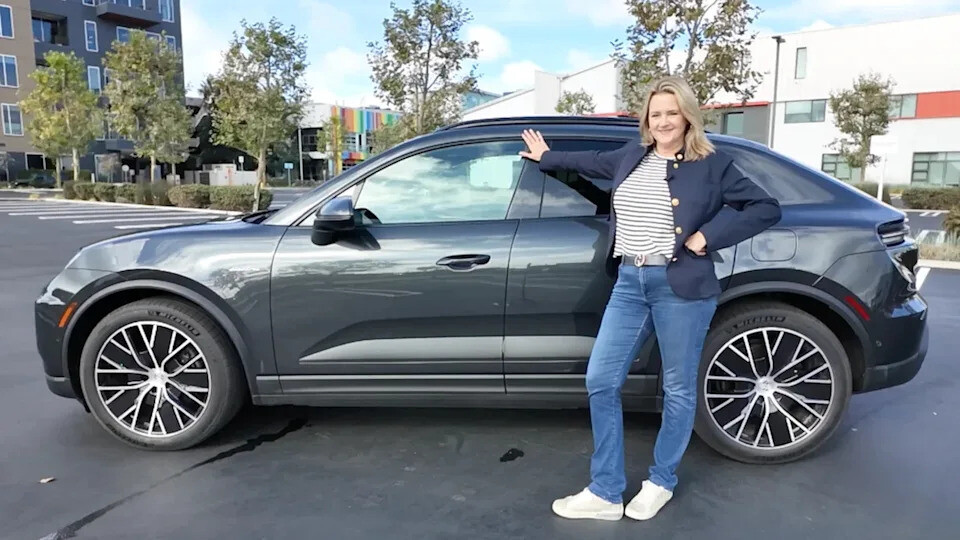
The Macan EV is an important model to those who want an electric, luxury sports EV, but the price hike is substantial
If you've been thinking of getting a gas-powered Porsche Macan, this is the time to get one: Starting next year Porsche is making them strictly electric (for now, anyway). Long the company's top-selling SUV, it made the transition to an electric platform a couple of years ago; this became a major talking point for luxury and performance shoppers. It comes with incredible EV-specific technology, a major leap in horsepower, and a very tech-forward and futuristic (yet still deliciously premium) interior.
But the price difference is a major roadblock. The standard Macan starts at $65,400, and you still get a turbocharger, 261 HP, and standard all-wheel drive for the family's annual ski trip. The maximum price is $94,200 for the GTS, but at the price, you get a much more powerful engine and track-ready upgrades. The Macan Electric starts at $80,300 and goes well north of six-figures to an eye-watering $112,700
Here's where the numbers lean towards the gas-only models: lower-to-mid trims of the gas-only Macan have a range of 376 to 416 miles, while the Electric model ranges between 290 and 332 miles, depending on how you configure it. Porsche's argument is horsepower—which ranges between 355 to 630. Does all that extra power justify that $14,900 to $18,500 jump in price? We're not so sure.
The Mini Cooper Countryman Electric Transforms Small Car Driving, But Gas-Only Gives You More

We love both versions, but the gas-only version is a better deal
The Mini Cooper Countryman offers pause for consideration in the EVs vs gas cars competition. It is one of our favorites because it's compact but packs a big personality, plenty of power, a surprising amount of space and it retains the planted, go-kart-like handling Mini is known for. It's also a lot less expensive than you'd think, with an accessible range of $38,900 to $46,900 — all of which come with all-wheel drive and maximum driving ranges of about 370 miles.
The Countryman Electric is described by Mini as "lightning in a bottle," and they're right. Starting at $45,200 (which is priced lower than the JCW model, by the way), you get more horsepower, all-wheel drive, quick charging, and a fun, futuristic but still very Mini exterior design. And while it seems like a good deal, you have to consider the range: 216 miles.
Which, even if you're bad at math like I am, is a heck of a lot less than the $38K base model that can carry the family 314 more miles before needing more gas. If it's mainly a commuter car and you can charge it at night in the garage, the EV version is priced just right. For the added power, the EV's range might be worth the trade-off of decent MPG..
For the Dodge Charger, the Electric Version is Worth the Price
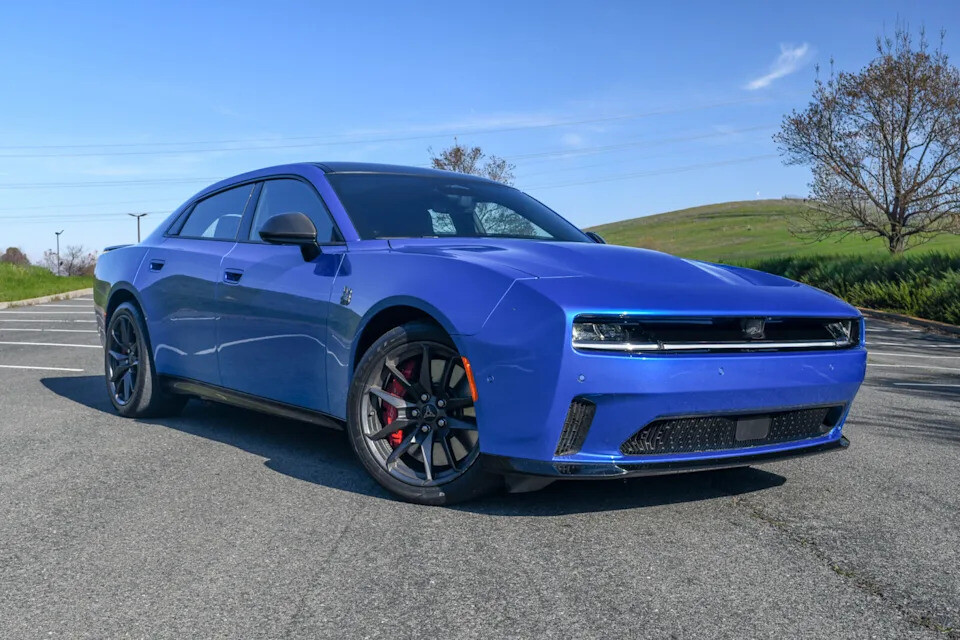
The front quarter view of the 2026 Dodge Charger EV
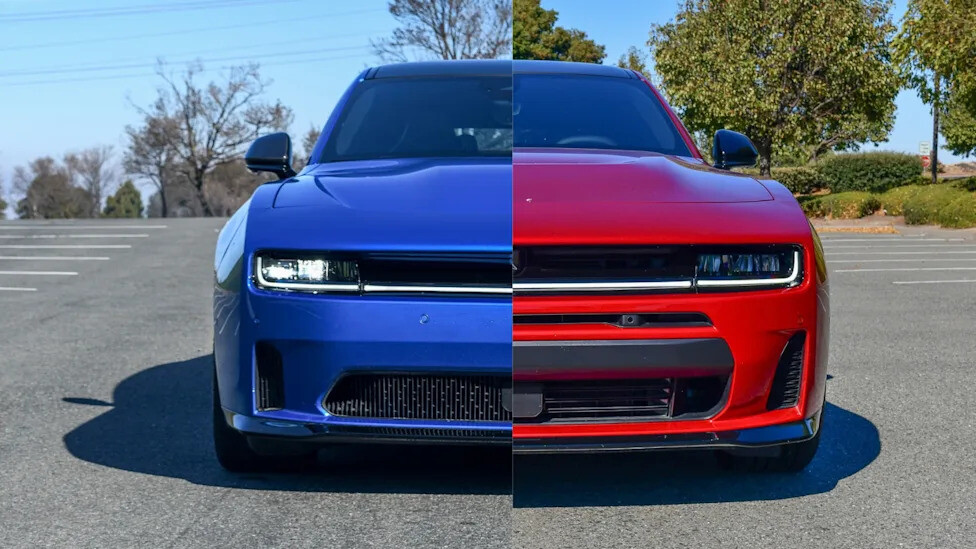
When Dodge announced that they were bringing back the iconic Charger as an EV, the reactions were mixed. Many diehards were skeptical about transforming a once HEMI-powered muscle car into an EV. Because Stellantis has always been a company that gives their customers what they want, the twin-turbo inline six-powered Charger SIXPACK was debuted, and we were shocked by how well both platforms worked.
The gas-only model ranges from $49,995 to $62,685, depending on whether you pick base model 2-door or the Scat Pack 4-door, while the EV model ranges from $59,990 to $66,990. For this model, we wholeheartedly recommend the EV version, because for $4,350, you significantly more horsepower (550 HP vs 670 HP), you get to keep the Drift and Donut modes, you get the fun "exhaust" sound, a smoother ride, and a much faster zero-to-sixty time.
You get to keep all that cargo space, the rear legroom, the sunroof, and they even look the same, too. The only real downside is the range: the EV gets a maximum range of about 231 miles, while the gas-only model averages 350 miles on a tank. But the sheer speed and power boost you get with the EV is insane for the price.
When it Comes to the BMW X5, We Love the Power of the iX5
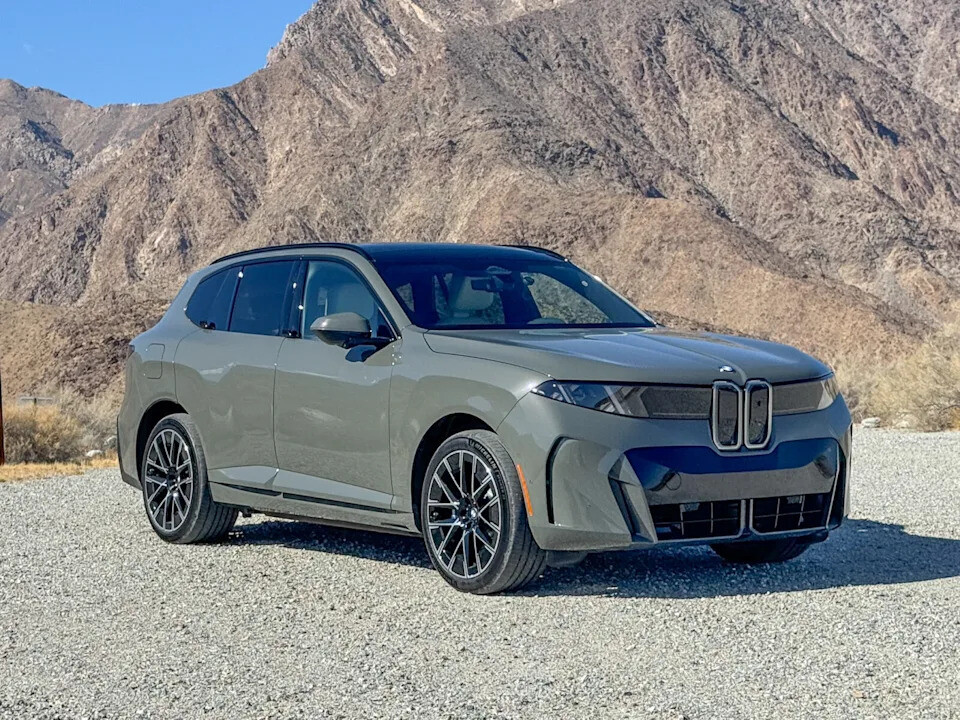
They felt similar, but the instant power was immediately noticeable
The BMW X5 is a well-rounded sports luxury SUV, and we've loved every generation we've been able to test. Recently, we were invited to experience the upcoming 2027 BMW iX5 (the electrified X5) alongside its gas-only and PHEV counterparts, and we were blown away with the performance, capability, and utility of BMW's largest EV SUV.
The gas-only all-wheel-drive X5 40 xDrive starts at around $73,550, while the electric iX5 60 xDrive starts at $81,250. For this matchup, it's easy for us to recommend the iX5. In luxury SUV territory, a $7,700 price jump is unusually narrow. For those extra Gs, you get an enormous leap in performance, jumping from 394 horsepower in the gas inline-six to a massive 570 horsepower and 593 lb-ft of instant electric torque. Merging onto fast-moving highway traffic with a car full of kids and gear is completely effortless, silky smooth, and library-quiet.
You don't lose a single inch of cargo room or rear legroom, you keep the gorgeous panoramic glass roof, and the iX5 even adds a handy front trunk to stash your dirty charging cables, muddy soccer cleats, or a rain-soaked coat. Better yet, range anxiety isn't a factor here: while the gas model gets around 450 miles on a tank, the iX5 boasts a very handsome 435-mile estimated electric range and lightning-fast charging speeds that can add roughly 170 miles in just 10 minutes. Unless you're routinely towing heavy trailers through remote charging deserts, the iX5 feels like the true, effortless luxury flagship the X5 was always meant to be.
The Volvo EX90 is Sexy and Chic, But the Gas-Only XC90 Might Be a Better Deal
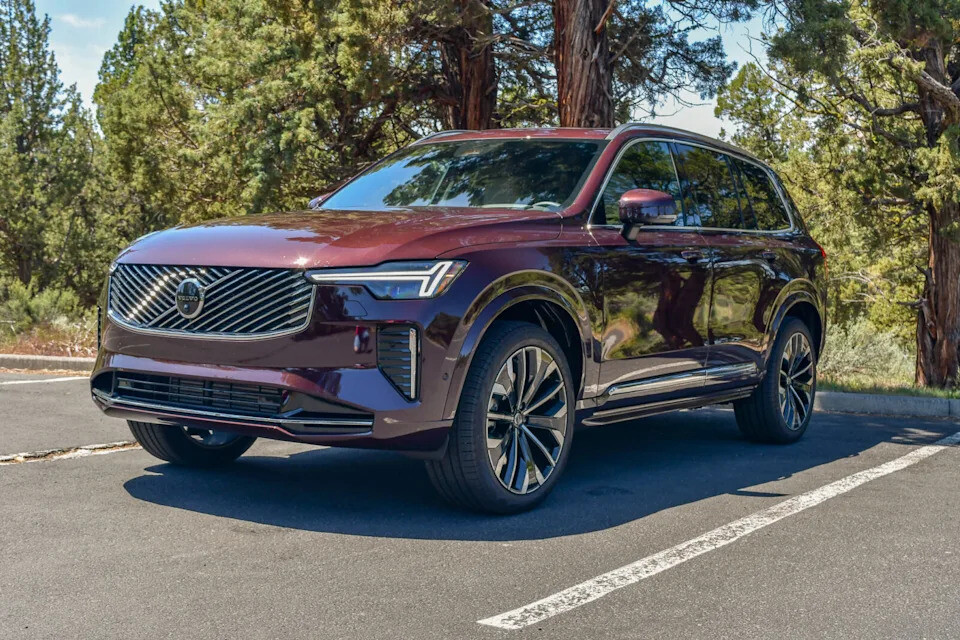
The front quarter end of the 2026 Volvo XC90 T8 Ultra AWD
We're big fans of the Volvo XC90, because it feels like the Goldilocks of midsized luxury SUVs. You can choose between a gas-only version, a PHEV, or an EV, the EX90. The mild-hybrid gas XC90 B5 AWD starts around $59,000 (and climbs into the $70k range for the PHEV T8), while the all-electric EX90 starts right around $80,000. In this matchup, our recommendation actually leans toward the gas (or even plug-in hybrid) XC90 for most busy families. While the EX90 is a technological masterpiece—packing roof-mounted LiDAR sensors, up to 496 horsepower, and a solid 310-mile range—the price premium is steep, and its button-free, screen-reliant dashboard takes some getting used to when juggling kids in the back.
The gas XC90 offers familiar physical buttons, up to 85.7 cubic feet of maximum cargo capacity (versus 67.6 cu ft in the EV), and the flexibility of 5-minute fuel stops on spontaneous family road trips. If you want silent EV school drop-offs without losing gas convenience, the XC90 Plug-In Hybrid (T8) is the real hero here: it gives you 455 horsepower, over 30 miles of pure electric driving around town, and a gas engine ready for cross-country drives. But if you want cutting-edge safety tech, whisper-quiet cabin luxury, and home charging convenience, the EX90 delivers a next-generation experience.
Pick The Right Powertrain For You

Sara standing with the electric version of the Mini Cooper Countryman
If we'd done this comparison a few years ago, the gas models would have clearly won out. But in just a few years, the price of EVs have come down, the price of the average car has gone up and the price of gas has become … painful.
But lifestyle is personal. If your priority is effortless morning commutes, the serene silence of an electric cabin, or the simple joy of charging overnight in your garage and saying goodbye to smelly pumps, go for the EV. When it fits your daily routine, that seamless, zippy drive is worth every single penny. Buy the car that serves your life—gas, electric, or somewhere in between. We won't judge.