
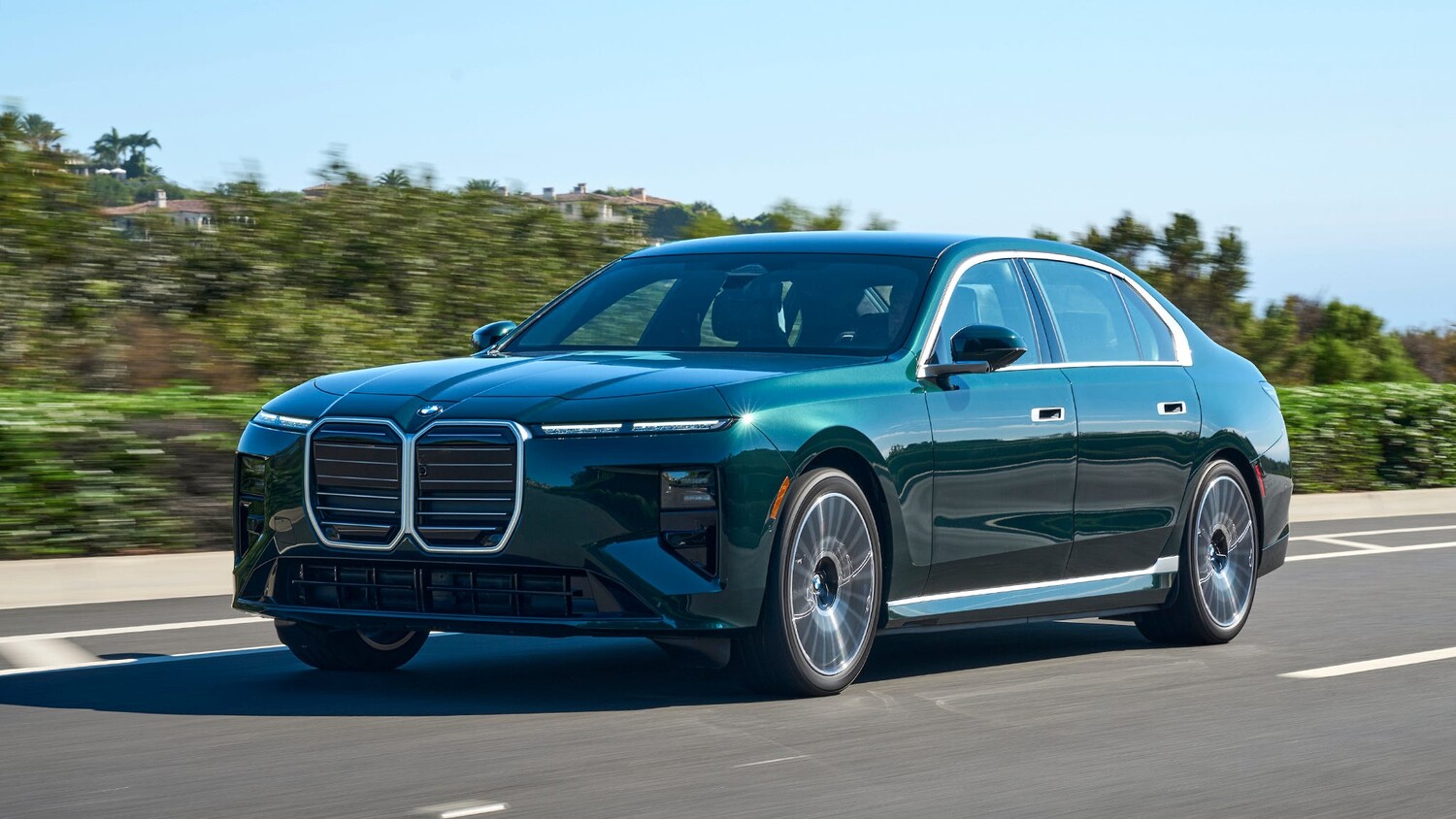
Technological evolution can make maintaining a luxury flagship’s status at the top of a vehicle lineup tricky. How are dealers supposed to move these executive sedans when the smaller models in the same lineup often come equipped with more of the latest innovations at a lower price? Some luxury automakers are content to just wait out the product life cycle for those flagships, but with its next-generation Neue Klasse vehicles now hitting dealers around the world, BMW’s not among them. We just drove the newly updated 2027 BMW 7 Series, and it turns out that the trickle-up technology makes for a much more compelling Bimmer flagship.
In a Nutshell
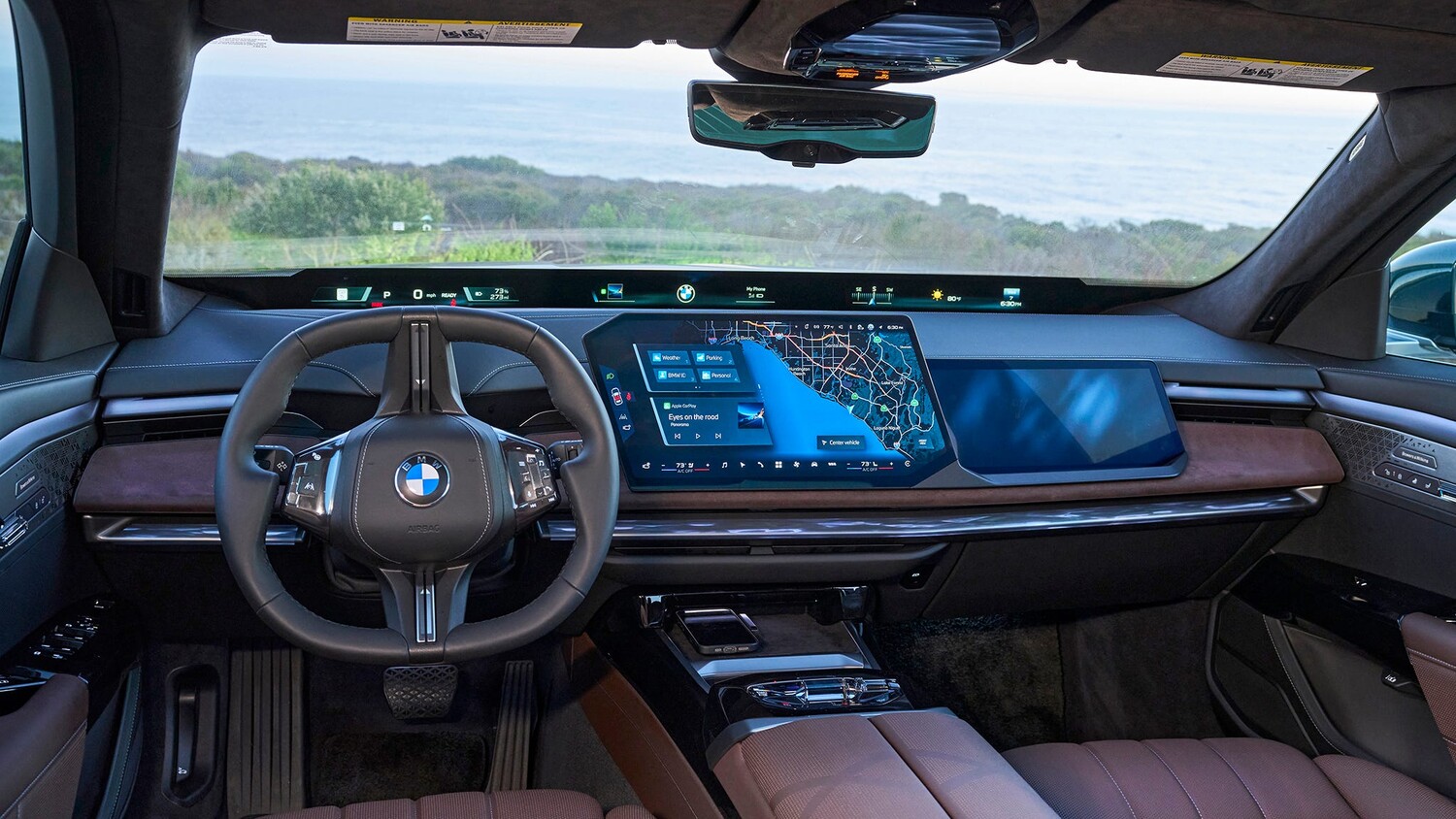
We’ll spare you the detailed rehash of the 7 Series’ updates for the sake of brevity and focus on the most important updates BMW made. The biggest is the 7’s new electrical architecture from the Neue Klasse 3 Series, iX3, and X5. This centralized computer system is 20 times faster than the system it replaces, opening the 7 Series to a full range of software-defined features, from its new hands-free driving system to the cinematic experiences in the back seat.
It also enables BMW to redesign the interior of the 7 Series to accommodate the company’s new customizable, AI-enabled panoramic display and intuitive new 17.9-inch infotainment system and accompanying 14.6-inch passenger display up front. It also helped improve the usability and usefulness of the rear 31.3-inch 8K theater screen in back, which now includes a camera and the ability to make Zoom calls.
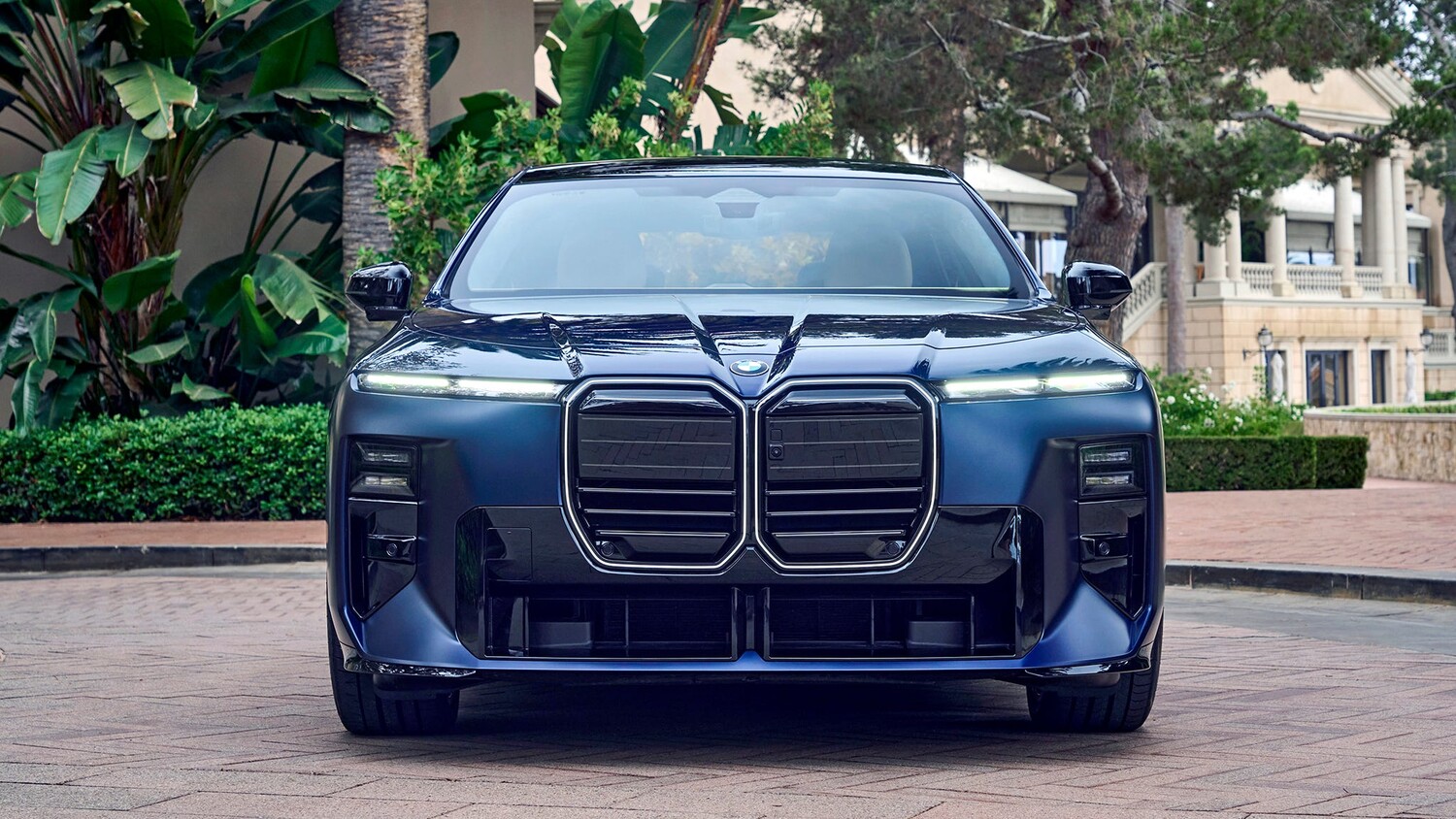
Naturally, BMW also took the opportunity to update the exterior styling of its top dog sedan. The 7 Series wasn’t a particularly attractive car pre-refresh. It still arguably isn’t, though the redesigned head and taillights coupled with the optional two-tone paint schemes do add an unmistakable splash of elegance to the car.
You’ll notice we’ve yet to touch on powertrains, and that’s because for now, they’re mostly the same. On the combustion side of the equation, the base 740 gets a new turbocharger, bringing its 3.0-liter I-6’s output up a few horsepower to 394, while torque remains flat at 398 lb-ft. As before, it’s paired with an eight-speed automatic and either rear- or all-wheel drive.
The electric i7 gets slightly more extensive updates, thanks to that aforementioned new electrical platform and BMW’s new Neue Klasse battery tech. Swapping from prismatic to cylindrical cells allows BMW to up battery capacity from 101.7 kWh to 112.5 kWh, boosting EPA-rated range from the low 300-mile realm to 373 miles in its most efficient configuration, the i7 50 xDrive with 20-inch wheels and summer tires. That model sports dual-motor all-wheel drive with a total output of 449 hp and 487 lb-ft of torque. There’s also an i7 60 xDrive with dual motors producing a combined 536 hp and 549 lb-ft of torque. Neither model has the 800-volt architecture of the “true” Neue Klasse vehicles, so they charge from 10 to 80 percent in around 30 minutes versus around 20 for the newer models.
Prices start at $101,350 for the 740, $107,750 for the i7 50 xDrive, and $126,250 for the i7 60 xDrive. Those models will be joined by a plug-in hybrid 750e and V-8-powered M760 over the coming year.